Guide index
Five routes into the craft
Read in any order. If you are new, begin with paper grain and tools, then choose a binding that matches the book you want to make.
01 / hard covers
Case binding without mystery
Follow the parts of a hardback: folded sections, mull, endpapers, boards, spine piece and covering material. The guide compares square backs, rounded backs, PVA and paste in the places where beginners most often over-tighten the book.
Read the case guide02 / exposed spine
Coptic stitch that opens flat
Learn how paired boards, folded sections and chain stitches work together. The page explains sewing stations, kettle stitches, waxed linen thread and why a Coptic book behaves differently from an adhesive-bound notebook.
Read the Coptic guide03 / side sewing
Japanese stab binding for single sheets
Use yotsume toji, the four-hole binding, as the base before trying tortoise-shell or hemp-leaf patterns. The guide covers punching, thread length, corner wrapping and the hinge margin that lets single sheets turn.
Read the stab guide04 / materials
Paper grain and adhesives
Find the grain before you fold, glue or cover boards. The guide sets PVA, wheat starch paste, methylcellulose and glue sticks beside paper movement so you can choose slower, cleaner or stronger joins with intent.
Read the material guide05 / first bench
The tools a beginner actually needs
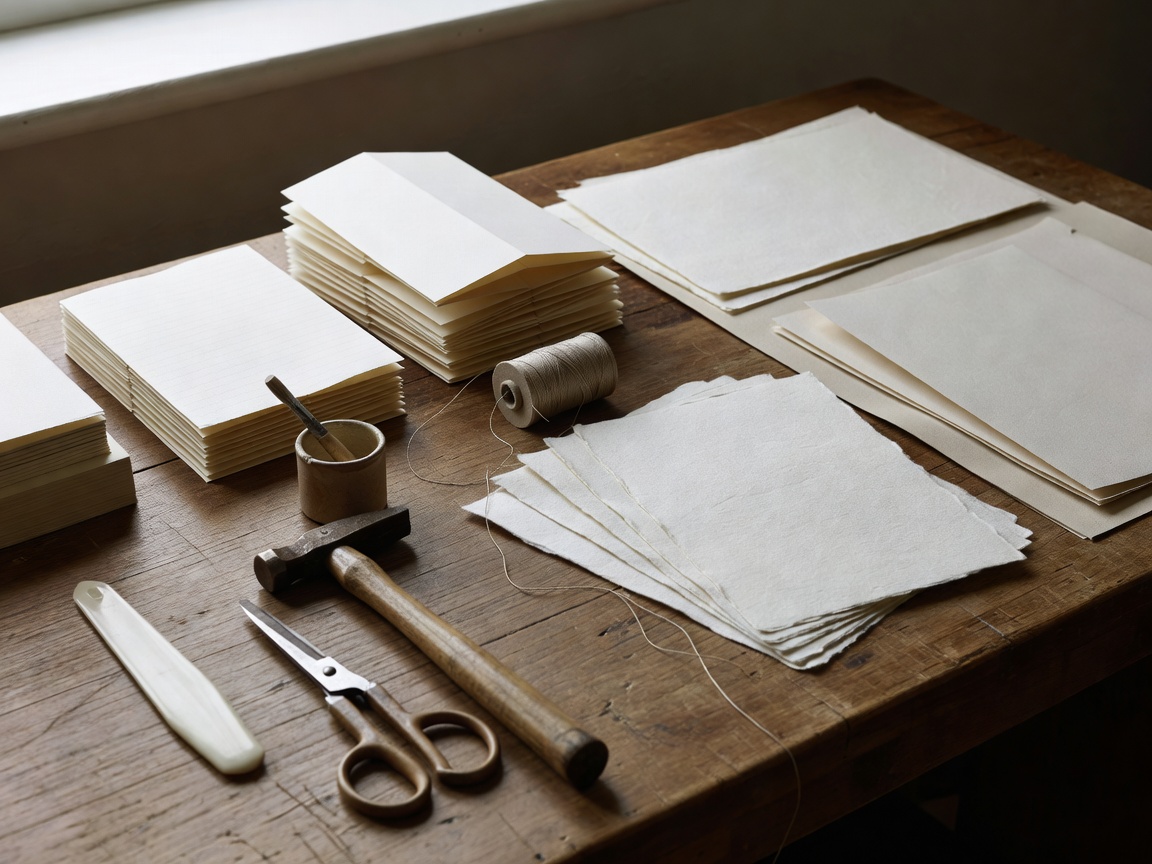
Build a small kit around a knife, metal ruler, bone folder, awl, needles, cutting mat, brush, weights and a safe way to pierce holes. The guide separates essential tools from handsome extras that can wait.
Read the tool guide